
Program
Suliman Tekalli, violin
Clarice Assad - Encuentros | La Entrada *
Javier Farias - La Noche | El Cante *
Antonin Dvořák - Piano Quintet No. 2 | Dumka | Scherzo
Chris Rogerson - Gentle Dances | Aria | Intermezzo *
Luigi Boccherini - Fandango
INTERMISSION
Andrea Casarrubios - Itinerante | Vahos | La Lima *
Heitor Villa-Lobos - Prelude No. 1
Claude Debussy - String Quartet | Assez vif et bien rythmé
Clarice Assad - Encuentros | Luna y Flor *
Claude Debussy - Clair de Lune
Ethan Wickman - An Immensity of Light *
world premiere
program notes
Clarice Assad is a Grammy Award–nominated composer, celebrated pianist, inventive vocalist, and educator is acclaimed for her evocative colors, rich textures, and diverse stylistic range. A composer with a prolific output, she has more than 90 works to her credit, including numerous commissions for Carnegie Hall, the Chamber Music Society of Lincoln Center, Orquestra Sinfônica de São Paulo, ROCO, LA Philharmonic, Grand Teton Music Festival, Santa Rosa Symphony, Metropolis Ensemble, the Bravo! Vail Music Festival, and the La Jolla Music Festival, to name a few. About her new work for us, ENCUENTROS, she writes:
Encuentros (Encounters) is a diptych exploring moments of meeting—both playful and profound. The first movement, La Entrada, introduces the performers one by one in a theatrical entrance, weaving witty musical gestures with subtle stage choreography. This spirited opening pulses with energy, inviting the audience into an intimate, interactive space. The second movement, Luna y Flor, draws inspiration from the Amazonian legend of Vitoria Regia. In this tale, a young indigenous woman falls in love with the moon’s reflection shimmering on the water and plunges into the river depths to reach it. Moved by her devotion, the god Tupã transforms her into the Vitoria Regia flower—a night-blooming water lily that opens its petals to the moon’s light. This movement is dedicated to Agarita, whose own encounter with Pablo Sainz-Villegas inspired the work’s title. Luna y Flor unfolds as a romantic meditation on longing, transformation, and the mysterious pull of beauty just beyond our reach.
Chilean American composer Javier Farias is one of the leading living composers for the guitar. Winning First Prize in several competitions including the Andrés Segovia Composition Competition, he was awarded the Fromm Music Foundation Prize at Harvard University for his concerto for two guitars, composed for Sérgio and Odair Assad and the YOA Orchestra of the Americas. After performing his work Andean Suite for guitar and string quartet last year, we fell in love with Farias’ deeply expressive and characterful style, and we are excited to premiere this new work of his for the repertoire. La Noche and El Canto are part of a set of three movements that we have commissioned, and Farias writes that they evoke the suffering, anguish, and resilient spirit found in the marginalized origins of Flamenco art.
Antonin Dvořák’s Piano Quintet, one of the staples of the chamber music repertoire, is rooted in a Czech folk style that shows itself most clearly in the middle movements on this program.
The Dumka (literally “Thought”) is a Slavic form that alternates between introspection and sudden bursts of energy. Opening with a deeply reflective melody from the viola, like a song remembered from afar, the music is repeatedly interrupted by brighter dances, sometimes a smiling memory, other times an ecstatic frenzy. Instead of developing in a traditional sense, the movement unfolds as a series of emotional contrasts, shifts between melancholy and vitality that feel spontaneous and conversational. The third, scherzo movement is a Furiant, a fiery Czech dance known for its rhythmic complexity and drive. Here, Dvořák plays with shifting accents that blur the sense of meter, creating a feeling of propulsion and unpredictability. The central trio offers a brief moment of lyric grace, but the restless energy soon returns.
Agarita has admired the work of Chris Rogerson for several years, after performing his piano quartet Summer Night Music several times, and watching his career as a composer continue to bloom. Frequently commissioned by top artists and series, most recently the Escher String Quartet for a Chamber Music Society of Lincoln Center concert in Alice Tully Hall, he has written for cellist Yo-Yo Ma, violinist Ben Beilman, pianist Anne-Marie McDermott, the Dover Quartet, and more. His new work for us on this program, Gentle Dances, begins as an evocation of the Baroque, with a reflective aria. A persistent drone in the strings, like a hazy sky, colors the environment for the guitar, which freely sings its expressive melodies in the style of an ancient chant. After the music intensifies into something more lush and unified, we return to the stillness with which we began. The second movement is a simple dance. It is structured and courtly, but tinged with melancholy, as if slightly broken. The rhythm suggests perhaps the Baroque Loure dance, but the harmony suggests a different dance: between minor and major, hopeful and dark.
Italian composer and virtuoso cellist Luigi Boccherini composed over 100 string quintets, which featured the unusual instrumentation of an extra cello instead of an extra viola. The quintet on today’s program however, his Quintet no. 4 in D Major, nicknamed “Fandango” for its last movement, was written for added guitar, as it was commissioned by a guitar-playing Spanish nobleman. Leaning into the Spanish style, Boccherini even includes a castanet part.
Spanish-American composer Andrea Casarrubios is no stranger to Agarita’s programs. Her music is lush, expressive, tangible and relevant, and she continues to build her range of compositions each year. We are honored to finally receive a brand-new piece of hers. About this work Itinerante, Casarrubios writes:
Like walking through a familiar street at different moments in life, Itinerante depicts how places remain constant though circumstances may change. Throughout the piece, themes return in altered forms, like the same streets walked in different years—familiar yet never the same, reminding us that we are always in passage. Vahos contemplates the impermanence of lived experience itself: guitar harmonics emerge and dissolve almost as soon as they appear. La lima, humorous and playful, elevates the humble nail file — every guitarist's constant companion — to rhythmic protagonist amid festive melodies inspired by bluegrass and traditional Riojan bagpipes. Itinerante was commissioned by La Rioja Festival and written for Pablo Sáinz-Villegas and Agarita, with their premiere performances in Texas (USA) and La Rioja (Spain) in 2026.
Heitor Villa-Lobos’ Five Preludes for guitar are among the most beloved works in the instrument’s repertoire, blending classical form with the colors and rhythms of Brazil. Prelude No. 1, dedicated to the “melancholic soul of the Brazilian,” unfolds like a nostalgic song. Its opening arpeggios create a flowing, serenade-like texture, where melody and accompaniment merge into a single expressive gesture. A brighter middle section introduces a gentle dance before the music returns to the quiet, reflective mood of the opening.
Claude Debussy’s String Quartet in G minor reveals his fascination with color and texture, especially in this second movement, Assez vif et bien rythmé. Played almost entirely pizzicato (plucked strings), the music is crisp and percussive, often evoking the sound of plucked guitars and suggesting a subtle connection to Spanish musical style, which fascinated Debussy. A contrasting middle section briefly softens the texture, but rhythm remains central. The result is music that feels vivid and intentional, yet elusive and fleeting.
Clair de Lune (“Moonlight”) by Claude Debussy is as famous a work as it gets; its radiant, suspended harmonies and tender lyricism have captured our hearts for over a century. Yet beneath its romantic familiarity lie metaphors for the ephemerality of life, and the light and shadow that govern our human condition. Paul Verlaine’s celebrated poem of the same name inspired Debussy to create this vulnerable soundscape. His poem translates to:
our soul is a chosen landscape
where charming masqueraders and dancers move,
playing the lute and dancing — and almost
sad beneath their fantastic disguises.
While singing in a minor key
of victorious love and the easy life,
they do not seem to believe in their happiness,
and their song mingles with the moonlight,
with the still moonlight, sad and beautiful,
which makes the birds dream in the trees,
and the fountains sob with ecstasy —
tall, slender fountains among marble statues.
San Antonio-based composer Ethan Wickman stunned his last year with his massive work for us Shimmers of Byzantium, which was a cathartic journey about divinity, time, and mortality. We are honored to receive another new work of his, especially for this project, called An Immensity of Light. About this work, Wickman writes:
When offered the commission to write this work for guitarist Pablo Sáinz-Villegas and the Agarita Chamber Players, the implicit directive was clear: create a work that communicates across cultures, that transcends barriers, and that shrinks the spaces that divide us. If there is an ethos that binds these luminous musicians, it is certainly this: music belongs to everyone, everywhere. My mind then went to a passage once quoted in an essay entitled Too Many Choices by Sir Michael Tippett: I know that my true function within a society that embraces all of us is to continue an age old tradition, fundamental to our civilization, which goes back into prehistory, and will go forward into the unknown future. This tradition is to create images from the depths of imagination and then to give them form, whether visual, intellectual, or musical. For it is only through images that the inner-world communicates at all: images of the past; shapes of the future; images of vigor for a decadent period; images of calm for one of true violence; images of reconciliation for worlds torn by division; and in an age of mediocrity and shattered dreams, images of abounding, generous, exuberant beauty.” An Immensity of Light maps a geography that explores the probing of a soul in crisis. Beset with confusion, division, contradiction, and duplicity, the imagined frenetic protagonist expands outward by moving inward, slowing to the pace of deep, deliberate breaths in search of epiphany. Listening closely you will hear guitar and piano in conversation within an atmosphere painted by a string quartet that both anticipates and reflects the dialog. After an exchange of peace between guitar and piano, an ecstatic epiphany ensues, as if for a moment an immensity of light illuminates the troubled soul and its ruptured universe, and all flows together in a vision of hope, love, and reconciliation.
featuring

Praised as “the soul of the Spanish guitar”, Pablo Sáinz-Villegas has become a worldwide sensation known as this generation’s great guitarist. Pablo Sáinz-Villegas has been acclaimed by the international press as the successor of Andrés Segovia and an ambassador of Spanish culture in the world. His "virtuosic playing characterized by irresistible exuberance" (The New York Times) make him one of the most acclaimed soloists by prestigious conductors, orchestras and festivals. He is known for his passionate, emotive and open-hearted playing, whether he is performing at intimate recital halls, or playing to an audience of over 85,000 at Santiago Bernabéu Stadium in Madrid with beloved tenor Plácido Domingo who has hailed him as "the master of the guitar”. Together they have performed at the Hollywood Bowl in Los Angeles as well as on a floating stage on the Amazon River. They most recently released “Volver” a duo album with Sony Classical. Pablo Sáinz-Villegas has appeared on some of the world’s most prominent stages including the Carnegie Hall in New York, the Philharmonie in Berlin, the Musikverein in Vienna and the National Center for the Performing Arts in Beijing. He has played in more than 40 countries and with orchestras such as the Israel Philharmonic, the Los Angeles Philharmonic and the National Orchestra of Spain. In 2019 Pablo will make his debut with the Chicago Symphony Orchestra playing the beloved Concierto the Aranjuez and as a solo recitalist he will perform for the first time at the Harris Theater in Chicago and at Boston’s Celebrity Series. He will also continue touring with his trio band along with a special presentation at the iconic Blue Note Jazz Club in New York. Billboard Magazine named him “the global ambassador of Spanish guitar” and as passionate promoter of the development of new repertoire, he has made numerous world premieres including the first composition for guitar by five-time Academy Award-winner John Williams. Sáinz-Villegas thrives over a continuous search of innovative ways to inspire communities since he considers that “music is an ideal tool to humanize this world”. As a lifelong dreamer, educator and philanthropist he has reached more than 35,000 children and youth through his non-profit ‘The Music Without Borders Legacy’ and through his various Artist-In-Residence collaborations with orchestras and festivals.

A violin virtuoso of extraordinary versatility and artistry, American violinist Suliman Tekalli has captivated audiences worldwide as a soloist, chamber musician, and orchestral leader. As a prizewinner at numerous international competitions, most notably as top prizewinner at the 2015 Seoul International Music Competition, Tekalli has performed as a soloist with orchestras across North and South America, Europe, and Asia, appearing at esteemed venues such as Wigmore Hall, the Kennedy Center, and the Seoul Arts Center. His performances have been broadcast on NPR, CBC Radio 3 in Canada, and KBS TV in Korea.An accomplished chamber musician, he has appeared at renowned festivals including Music@Menlo, Yellow Barn, and the Banff Centre. His collaborations include performances with Gil Shaham, Cho-Liang Lin, Donald Weilerstein, Paul Watkins, Wu Han, and David Shifrin. He regularly tours the continents with sibling and pianist Jamila Tekalli Hanner as the Tekalli Duo. Mr. Tekalli was a former member of the Grammy-nominated Catalyst Quartet and the internationally acclaimed and genre-defying string quintet Sybarite5. Suliman is the current concertmaster of the Indianapolis Chamber Orchestra, and has also led as concertmaster for notable ensembles such as the Orpheus Chamber Orchestra, New York Classical Players, Sphinx Virtuosi and the International Sejong Soloists. Mr. Tekalli has made a number of transcriptions and arrangements that have been featured in the album Art of Transcription on the MSR Classics label. His commitment to contemporary music has led to collaborations with contemporary composers such as Caroline Shaw, Paul Wiancko, Andrea Casarrubios, Curtis Stewart, Michael Brown, and Reena Esmail among others. A passionate educator, he has given masterclasses across the U.S. and South America and has served as a fellow of Carnegie Hall’s Ensemble Connect. He has also served as a faculty member over multiple summers at the Sphinx Performance Academy at the Juilliard School and at the Cleveland Institute of Music. He has served as a regular coach for talented pre-college student chamber music groups through the New York Youth Symphony Chamber Program since 2021. The summer of 2026 will see his appearances as a performer and educator at the Rushmore Music Festival in South Dakota, Appalachian Chamber Music Festival in West Virginia, Kinhaven in Vermont, and La Rioja Festival in Spain.Tekalli began his violin studies with Russian violinist and pedagogue Lev Gurevich. He went on to study at the Juilliard School, the Cleveland Institute of Music, and the Yale School of Music, training under esteemed mentors including Hyo Kang, Joel Smirnoff, Sergiu Schwartz and Ayako Yonetani. He currently resides in New York City and performs on both a 2016 Joseph Curtin violin as well as the 1683 “Cobbett” Stradivarius.

A powerful communicator renowned for her musical scope and versatility, Brazilian-American Clarice Assad is a significant artistic voice in the classical, world music, pop, and jazz genres and is acclaimed for her evocative colors, rich textures, and diverse stylistic range. A prolific Grammy Award–nominated composer with more than 70 works to her credit, she has been commissioned by internationally renowned organizations, festivals, and artists and is published in France (Editions Lemoine), Germany (Trekel), Brazil (Criadores do Brasil), and the U.S. (Virtual Artists Collective Publishing). An in-demand performer, she is a celebrated pianist and inventive vocalist who inspires and encourages audiences’ imaginations to break free of often self-imposed constraints. Assad has released seven solo albums and appeared on or had her works performed on another 34. Her music is represented on Cedille Records, SONY Masterworks, Nonesuch, Adventure Music, Edge, Telarc, NSS Music, GHA, and CHANDOS. Her innovative, accessible, and award-winning VOXploration series on music education, creation, songwriting, and improvisation has been presented throughout the world. Sought-after by artists and organizations worldwide, the multi-talented musician continues to attract new audiences both onstage and off.

Hailed as a “confident new musical voice” (The New York Times), a “big discovery” (The Philadelphia Inquirer), and a “fully-grown composing talent” (The Washington Post), Chris Rogerson’s music has been praised for its “haunting beauty” and “virtuosic exuberance” (The New York Times). Rogerson’s music is often characterized by its lyricism: recent notable works include Of Simple Grace, for cellist Yo-Yo Ma, his violin concerto, for Benjamin Beilman and the Kansas City Symphony, and Dream Sequence, for Anne-Marie McDermott and the Dover Quartet. Rogerson’s music has been programmed at venues around the world including Carnegie Hall, the Library of Congress, the Kennedy Center, Wigmore Hall in London, Prague’s Rudolfinum, Radio France, and the Musikverein in Vienna. He was the 2022 recipient of the Elise L. Stoeger Prize from the Chamber Music Society of Lincoln Center, the most prestigious honor given for chamber music composition.
An avid traveler who has visited over 120 countries around the world, Rogerson's work is frequently evocative of a sense of place: Four Autumn Landscapes, a clarinet concerto written for Anthony McGill, is a portrait of his childhood home in Buffalo, New York while String Quartet No. 4, commissioned for the Escher Quartet, draws from his experience in a remote corner of Afghanistan. His first piano concerto, Samaa', praised as "captivating" (Gramophone) and "haunting" (Minnesota Star-Tribune), was commissioned by Bravo! Vail for Anne-Marie McDermott and the St. Paul Chamber Orchestra and was inspired by a recent trip to Yemen.
Rogerson also regularly collaborates with artists in other disciplines: recent examples include Sacred Earth, for mezzo-soprano J’Nai Bridges with video by Emmy-nominated director and National Geographic photographer Keith Ladzinski, and Azaan, a play written for the Oregon Symphony in collaboration with Dipika Guha. His work has been featured in a variety of mediums from comedian Joe Pera’s web series “How to Make It in USA” to ballet by choreographer Claudia Schreier.
Other commissions and performances have come from the Atlanta, Houston, Indianapolis, Milwaukee, New Jersey, New World, and San Francisco symphonies, the Buffalo Philharmonic, and the Orchestra of St. Luke’s. Mr. Rogerson previously served as Composer-in-Residence of Young Concert Artists as well as the Composer-in-Residence and Artistic Advisor of the Allentown Symphony and the Amarillo Symphony. He has been honored with awards and fellowships from the American Academy of Arts and Letters, the Theodore Presser Foundation, the MacDowell Colony, Yaddo, and Copland House. His upcoming projects include works for pianist Inon Barnatan, guitarist Pablo Sáinz-Villegas, the Kansas City Symphony, and the Aspen Music Festival.
Born in 1988, Mr. Rogerson studied at the Curtis Institute of Music, Yale School of Music, and Princeton University with Jennifer Higdon, Aaron Jay Kernis, Martin Bresnick, and Steve Mackey. In 2012, he co-founded Kettle Corn New Music, a new music presenting organization in New York City, and currently serves as its co-artistic director. In 2016, Mr. Rogerson joined the faculty at the Curtis Institute of Music in Philadelphia, where he lives full-time with his chocolate lab, Poppy.
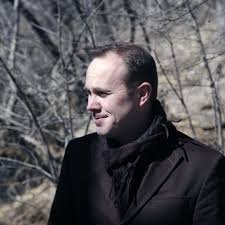
Ethan Wickman (b. 1973), composer and oudist, traces his musical roots to Western frontier pioneers and a Southern California upbringing where hymns, folk songs, Beethoven, and surf rock shaped his early sound world. Raised between the vast Pacific and the Sonoran Desert, he developed a sense of openness and transcendence that informs his music today. Wickman studied piano, guitar, and voice before earning degrees in composition (BM, Brigham Young University; MM, Boston University; DMA, University of Cincinnati-College Conservatory of Music). His later studies of the oud and Middle Eastern music with Ramy Adly and Yurdal Tokcan deepened his palette of modal colors and improvisatory nuance.
Wickman’s music blends expressive lyricism, lush Western harmonies, and contemplative modal inflections, creating spaces for reflection and catharsis. Recent works include the oratorios To a Village Called Emmaus and That They Might Have Joy, and Shimmers of Byzantium, inspired by W.B. Yeats’ mystical poem Sailing to Byzantium. His cantata Ballads of the Borderland explores migration and assimilation through sweeping textures and family narratives.
Praised by The New York Times as “a composer of facility and imagination” and by WQXR for music where “the spiritual sublime is surprisingly close at hand,” Wickman’s works have been performed internationally. Honors include the Jacob Druckman Prize (Aspen Music Festival) and commissions from the Barlow Endowment, American Composers Forum, and Utah Arts Festival. He is Professor of Composition and Theory at the University of Texas at San Antonio and former Executive Director of the Barlow Endowment for Music Composition.
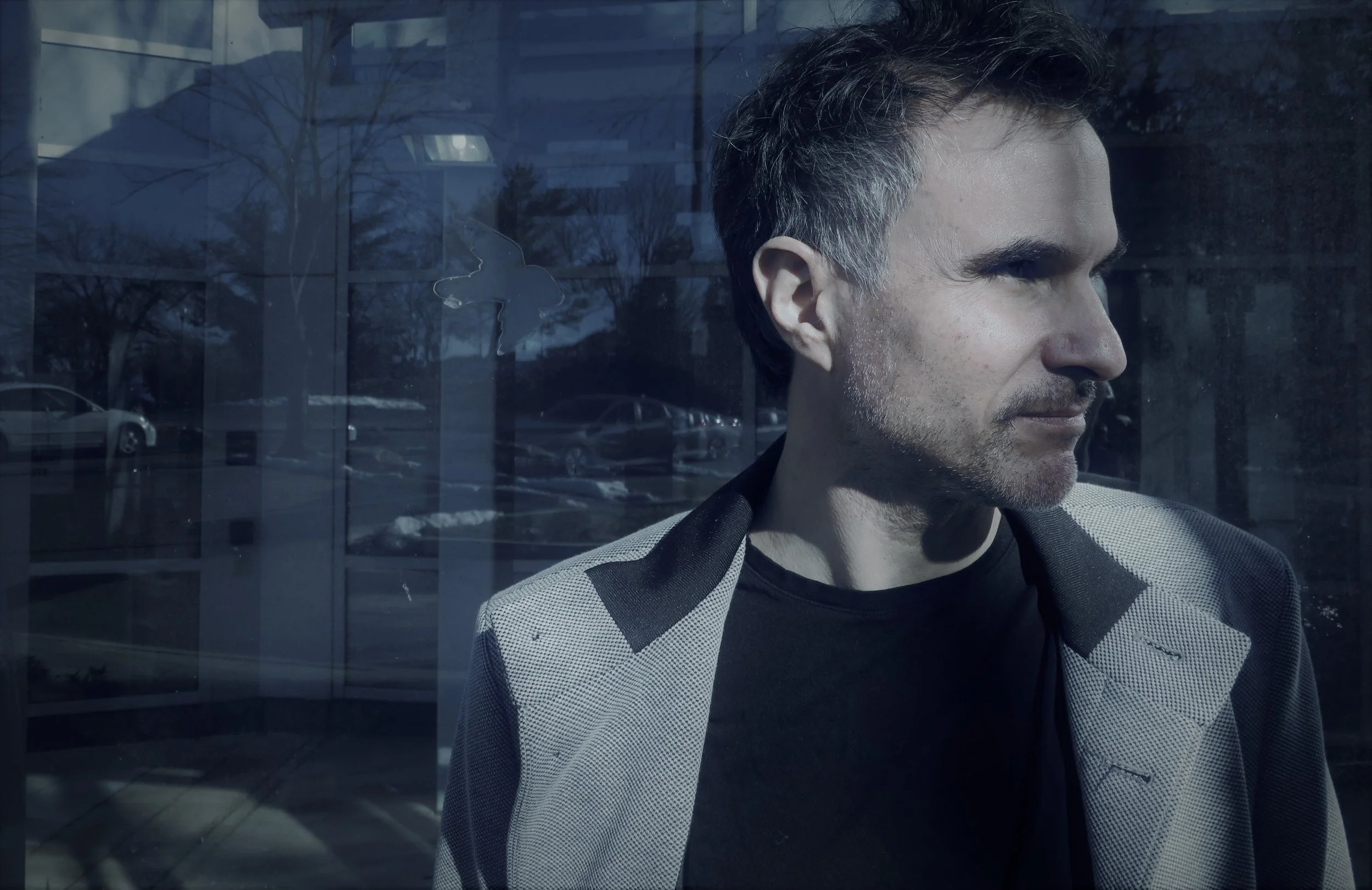
Chilean-American composer Javier Farias is the recipient of several international awards, including First Prize in the Andrés Segovia Composition Competition, the “2 Agosto” International Composing Competition, and the Michele Pittaluga Composition Competition. In 2014, he was awarded the prestigious Fromm Music Foundation Prize at Harvard University for a double guitar concerto composed for Sérgio Assad and Odair Assad and the Orchestra of the Americas.
Farias’s catalog spans a wide range of formats—from solo guitar and full guitar ensembles to chamber music, choral works, and large-scale orchestral compositions. He has written five guitar concertos, and his music has been premiered and recorded by renowned artists such as Andy Summers, Daniel Binelli, jazz guitarist Mike Stern, and classical guitarists Eliot Fisk, Pablo Sainz-Villegas, Ben Verdery, and David Tanenbaum. His works have also been performed by ensembles and orchestras including Sphinx Virtuosi, PubliQuartet, Apollo Chamber Players, Cuarteto Latinoamericano, Agarita Chamber Players, Philharmonie Baden-Baden, and Orchestra Filarmonica di Torino.
His music for guitar is also included in the curriculum of leading conservatories such as the Conservatoire de Paris, Yale University, the San Francisco Conservatory of Music, and the Royal Danish Academy of Music in Copenhagen.
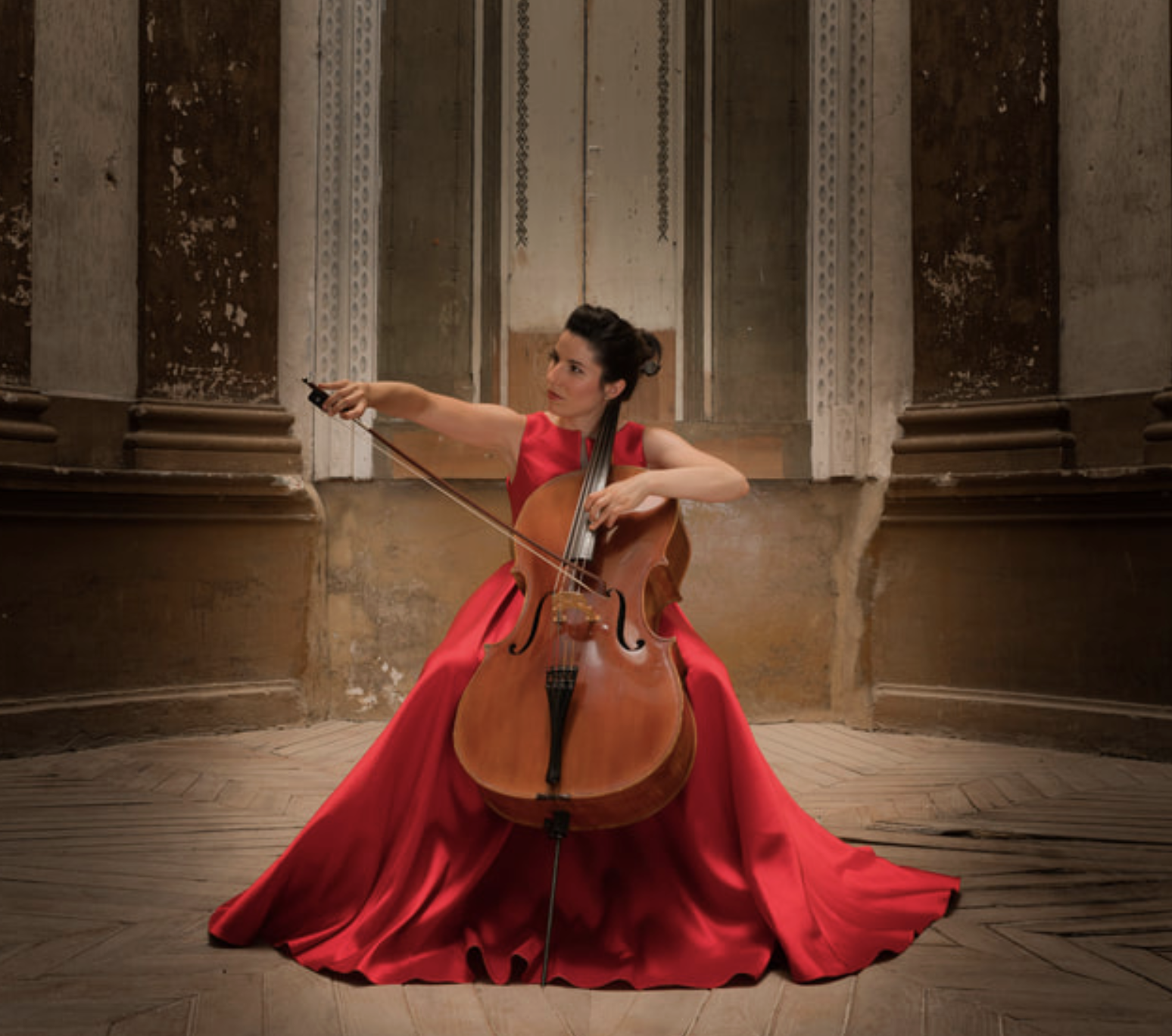
Praised by The New York Times for performances that "traversed the palette of emotions" with "gorgeous tone and an edge-of-seat intensity," GRAMMY® nominated Spanish-American composer and cellist Andrea Casarrubios has been commissioned by world-class orchestras and ensembles, and has appeared as a featured soloist throughout Europe, Asia, Africa, and the Americas. The title work from her album SEVEN was nominated for a 2025 GRAMMY® Award for Best Contemporary Classical Composition.
Casarrubios' compositions have been programmed by organizations including Carnegie Hall, the Chicago Symphony Orchestra, Indianapolis Symphony Orchestra, Charlotte Symphony Orchestra, National Philharmonic, and have been broadcast on NPR as well as national radio stations in Argentina, Brazil, France, Sweden, Australia, and Spain. Recent works include Afilador, commissioned by the Chicago Symphony Orchestra, and Herencia for String Orchestra, a "stirring creation" (The Strad) and “a bond of humanity through music” (The Boston Musical Intelligencer). Herencia was premiered at Carnegie Hall's Stern Auditorium in 2023, and featured on Sphinx Virtuosi’s 2025 album American Mirrors, released on Deutsche Grammophon.
Her acclaimed piece SEVEN "an intense and elegiac tribute to the essential workers during the pandemic" (The New York Times) received its Carnegie Hall premiere in 2021 and has been performed in more than 36 countries since. SEVEN was nominated for a GRAMMY® Award following its release on the 2024 album of the same name, which featured Casarrubios as cellist and composer in seven of her most recent works including collaborations with Manhattan Chamber Players and the Chicago Symphony Orchestra. First Prize winner of numerous international competitions and awards, Casarrubios has appeared multiple times at Carnegie Hall, Beijing’s National Center for the Performing Arts, and the Ravinia and Verbier Festivals.
As a guest soloist, engagements include the Charlotte Symphony Orchestra’s world premiere of Casarrubios’ large-scale concerto for cello and orchestra, MIRAGE, led by conductor Christopher James Lees, as well as concerts at the Brussels Cello Festival, Festival Internacional de Violoncello León in Mexico, and the George Enescu Festival in Romania. Other recent appearances include performances of Franz Schubert’s Arpeggione Sonata arranged for cello and orchestra by Casarrubios herself. She is the Composer in Residence at La Rioja Festival 2026, and during the summer season Casarrubios will premiere her own Double Concerto for cello, percussion, and orchestra in New York.
Casarrubios has taught masterclasses in Mexico, Brazil, South Africa, Spain, China, as well as at numerous festivals and institutions in the United States, including The Juilliard School, University of Colorado Boulder, University of North Carolina, Missouri State University and City University of New York. Her cello teachers have included Maria de Macedo, Lluis Claret, Amit Peled, Marcy Rosen, and Ralph Kirshbaum. She is an alumna of Carnegie Hall’s Ensemble Connect, and as part of her Doctoral degree in New York, Casarrubios also studied composition with John Corigliano.